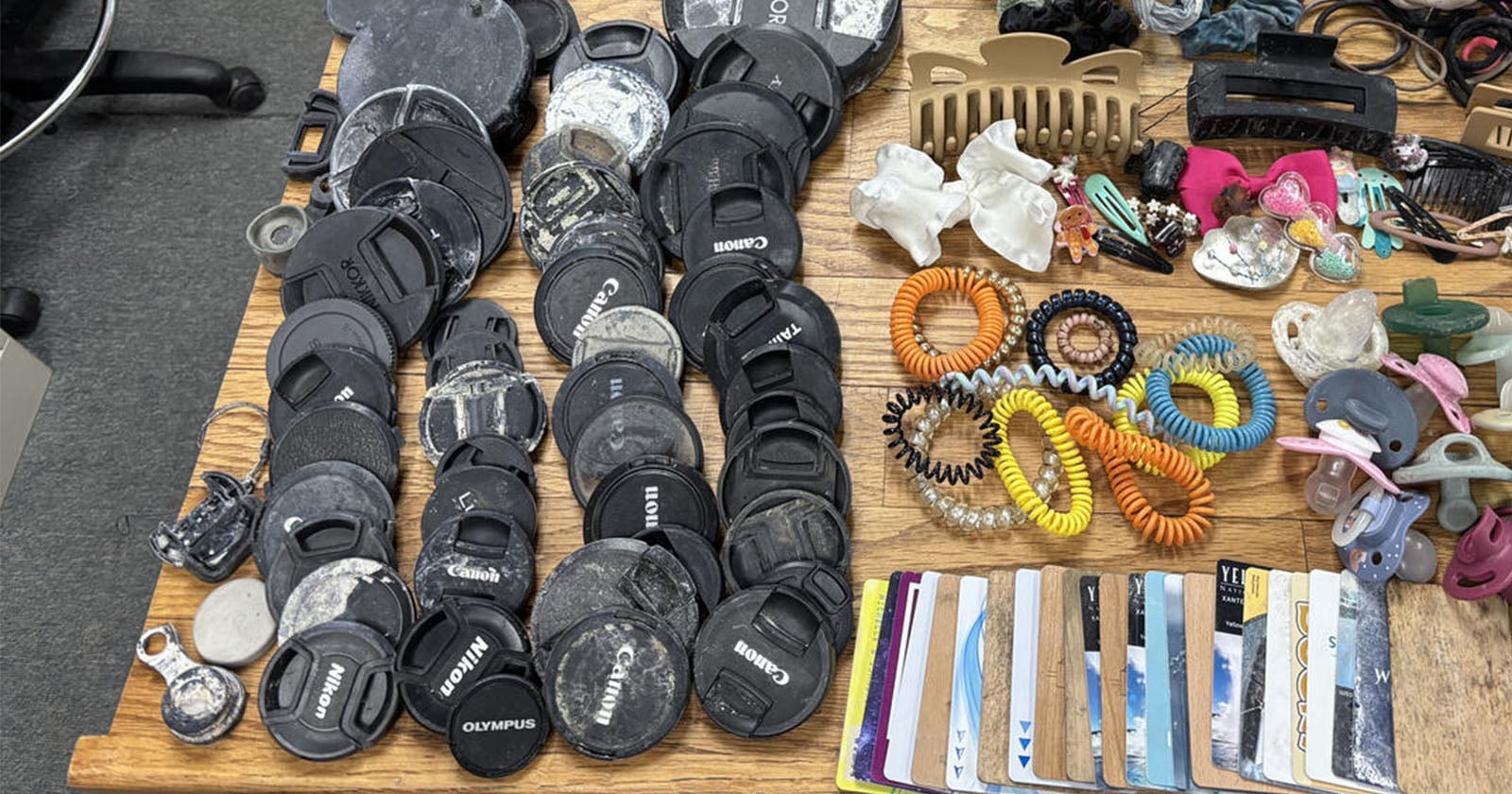
Yellowstone National Park staff perform many essential duties across the park’s 2.2 million acres, including collecting litter people lose in its sensitive hydrothermal areas. Places like Old Faithful, the Midway Geyser Basin, and Morning Glory Pool are home to a lot of trash, including, as it turns out, a bunch of lens caps.
As DPReview reports, Yellowstone’s Geology’s latest weekly Caldera Chronicles post covers the team’s hydrothermal area finds.
Naturally, with 4.5 million annual visitors, litter will happen. Unfortunately, some people intentionally leave trash behind, but other times people accidentally drop items into sensitive areas where they cannot safely retrieve them, or the wind takes something away before the visitor can pick it up. Photographers, if you drop a lens cap in a geothermal area, do not try to pick it up.
“No matter the type of debris, it needs to be removed,” Yellowstone Volcano Observatory writes. “Foreign material of any kind can damage or permanently alter a hydrothermal feature, whether from clogging its water supply, blocking or diverting its runoff channel, or polluting it with chemicals and sediment. Morning Glory Pool, in Upper Geyser Basin, famously changed its color in the twentieth century as a result of trash and items thrown in by visitors.”
As of early this month, Yellowstone’s Geology team had removed over 20,100 pieces of trash from hydrothermal areas across Yellowstone National Park. Unfortunately, that’s a record amount.
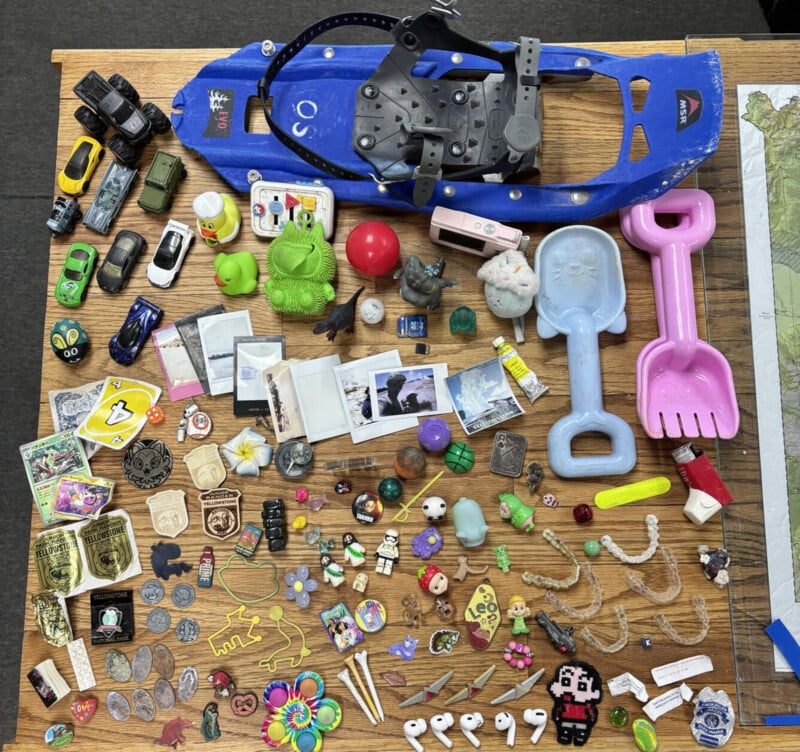
“Among all that debris have been a lot of interesting items, some wacky, some yucky, and others… puzzling?”
There were more than 280 hats collected so far this year, for example, including a World Cup hat, a Roblox bucket hat, and more. The hats will be washed and donated to local organizations. The team collected $18 worth of coins this summer. Hot springs are not wishing wells, people.
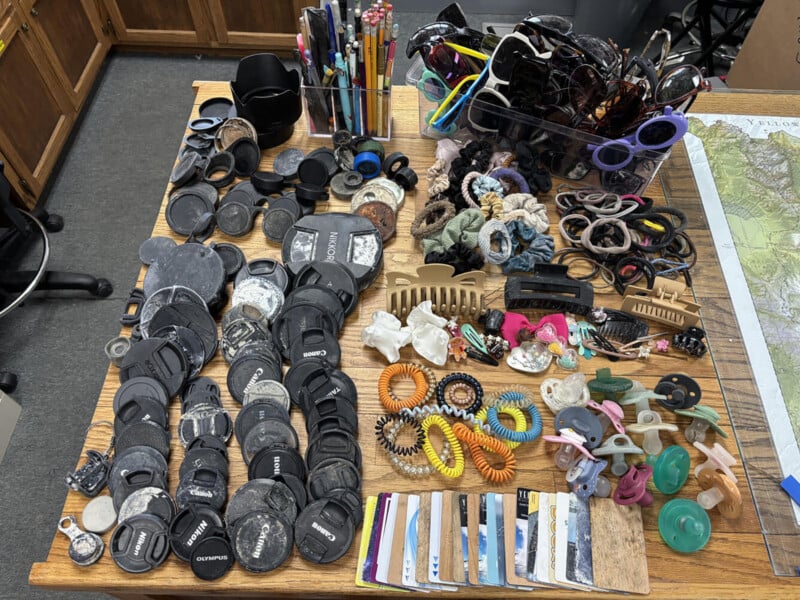
The most common plastic items found in hydrothermal areas, though, are lens caps. The team collected 54 of them. Based on the photos the team shared, it looks like there’s a healthy mix of brands represented. Photographers lost plenty of Nikon and Canon lens caps, including a particularly large Nikkor one. There are also camera body caps, binocular caps, and even a lens hood.
Photographers have even lost seven instant prints in hydrothermal areas so far this year.
“Curious how you can help? If you’re traveling through Yellowstone National Park, especially in hydrothermal areas, make sure to ‘stash your trash’ — put wrappers, tissues, and other easily windblown items deep in your pockets, a bag, or, even better, a trash can! If you’re adventuring in a windy area, consider tightening or taking off your hat. And remember, trails and boardwalks keep you safe, so stay on the path!” Yellowstone’s Volcano Observatory team concludes.
Image creditsYellowstone Volcano Observatory
Affiliate Disclosure PetaPixel articles may include affiliate links; we may earn a commission if you buy through one.


