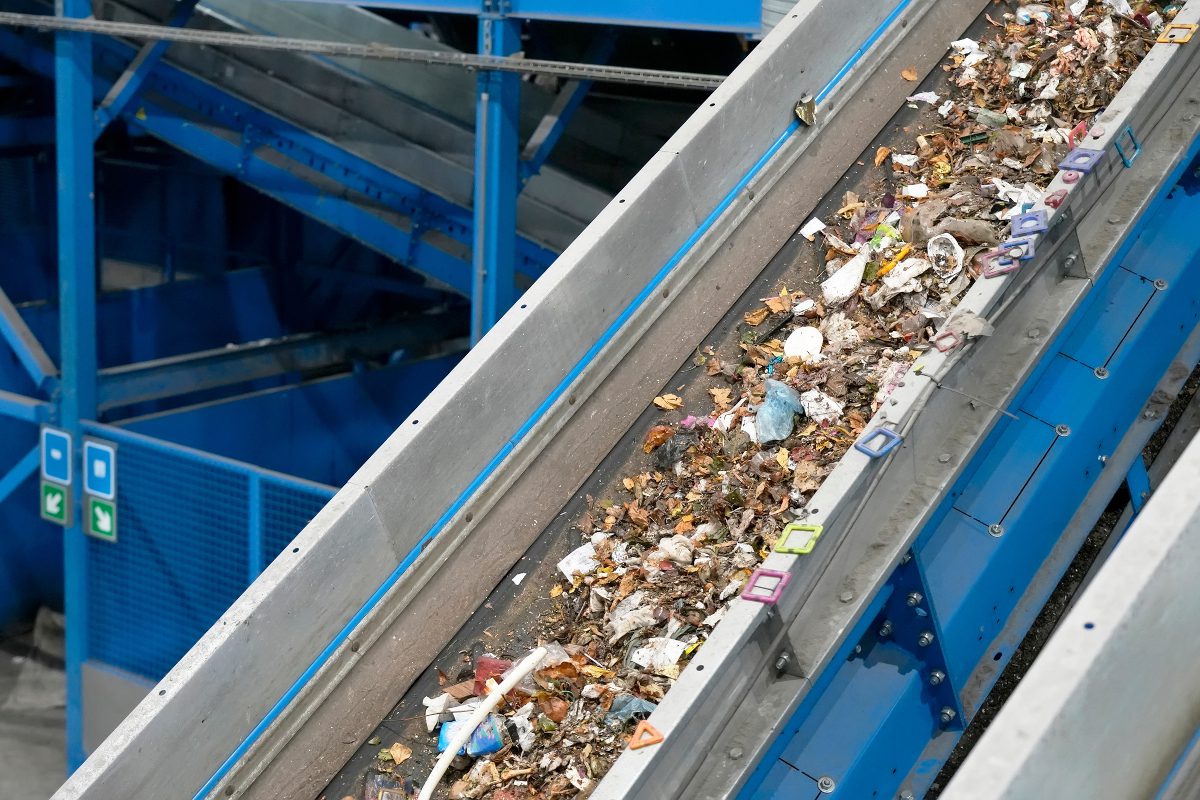


A new policy briefing urges the Government to look beyond recycling and collections, and introduce measures to stimulate reuse, domestic reprocessing and resource security
The Government should set out a new long-term strategy for England’s resources and waste sector, giving businesses and local authorities the certainty needed to invest in infrastructure, skills and services for the 2030s, according to the Chartered Institution of Wastes Management (CIWM).
In the policy briefing, A new strategic direction for the resources and waste sector in England, CIWM argues that the 2018 Resources and Waste Strategy is entering its final implementation phase and should be succeeded by a strategy and implementation roadmap extending at least through the Sixth Carbon Budget period of 2033–37, and ideally to 2042. The latter is the deadline for the statutory target to halve residual waste per capita from 2019 levels.1
CIWM acknowledges progress under the 2018 strategy, noting that Defra expects England to achieve 90–100% of its interim 2030 waste-reduction target. But it says a new framework is needed soon because of the long lead times involved in developing waste and resources infrastructure.
The organisation wants the forthcoming Circular Economy Growth Plan to provide an ambitious economy-wide vision, accompanied by a dedicated resources and waste roadmap setting out policy mechanisms and a clear timetable for implementation. This should include financial and fiscal incentives capable of directing investment towards the required infrastructure and markets.
Beyond packaging and food waste
A central argument of the briefing is that policy in the 2030s will have to broaden considerably beyond the areas targeted during the current decade.
While the 2018 strategy largely concentrated on household packaging and food waste, CIWM identifies textiles, electrical and electronic equipment (EEE), and construction and demolition materials as priorities for future intervention. Suggested measures include extended producer responsibility (EPR) for textiles and EEE, new infrastructure such as fibre-to-fibre textile recycling capacity, and greater use of material passports and pre-demolition audits in the built environment.
The briefing also argues for a stronger shift up the waste hierarchy, towards resale, repair, refurbishment, remanufacturing and product-life extension. It describes reuse as an area that has yet to receive “tangible policy support” in England, despite its potential environmental and economic benefits. Among the proposals are separate preparation-for-reuse targets within future recycling policies and measures addressing the disposal of unsold goods.
CIWM also identifies weak demand for secondary materials as a significant obstacle. Although collection systems have improved, it says large quantities of potentially valuable materials continue to be exported after limited sorting or processing, meaning that economic value and employment opportunities are lost overseas.
The briefing proposes financial mechanisms to stimulate domestic demand and investment in reprocessing and remanufacturing, suggesting that Contracts for Difference could potentially be used to support such infrastructure. It also calls for measures to encourage businesses using secondary inputs, alongside progressively stronger barriers to exporting secondary materials and used products.
Resource security
CIWM places much of this agenda in the context of growing concern over resource security and disruption to international supply chains. It argues that keeping products and materials circulating domestically could help reduce exposure to supply shocks while supporting regional economic growth and reindustrialisation.
The briefing points to approaches being pursued elsewhere, including China’s circular-economy planning and EU measures intended to stimulate markets for secondary materials. It also highlights Wales as having moved further than England in some areas, including support for flexible-plastics reprocessing and reuse and repair hubs.
“Businesses and local authorities need sufficient certainty and lead-in time to invest in critical infrastructure and improved services,” said Marcus Gover, chair of CIWM’s Policy & Innovation Forum, adding that a clear long-term strategy could also strengthen resource security, support economic growth and create skilled jobs.
The need for further policy intervention is also linked to England’s longer-term environmental targets. CIWM notes that Defra analysis indicates the current Collection and Packaging Reforms – including Simpler Recycling, packaging EPR and a deposit return scheme – will deliver less than one-third of the residual-waste reduction required by 2042.2 It also cites the Office for Environmental Protection’s 2026 assessment that England is “now using more resources with reduced efficiency”, and the Climate Change Committee’s conclusion that additional policy is required to bring recycling and decarbonisation onto a trajectory compatible with net zero.
Alongside recycling, reuse and domestic markets, the proposed strategy would address decarbonisation of residual waste treatment, including energy from waste (EfW) and landfill. CIWM calls for a new date for extending the UK Emissions Trading Scheme to EfW following its delay, progress on support for carbon capture, usage and storage at EfW facilities, and measures to increase landfill-gas capture and electrify sector fleets and infrastructure.
Waste crime and health and safety are identified as further priorities. The briefing calls for a long-term, funded approach to tackling serious organised waste crime and sufficient resources for environmental regulators, while highlighting the growing fire risk associated with vapes and other products containing embedded batteries.
Dan Cooke, CIWM director of policy, communications and external affairs, said there had been “significant and welcome progress” under the 2018 strategy, but that the sector now needed “a clear sense of direction for the 2030s”.
“We hope to see a high-level and ambitious Circular Economy Growth Plan published soon, but this sector needs a coherent strategic roadmap to deliver on its potential and continue the strong progress made over recent years towards greater UK resource efficiency,” he said.
CIWM says the 2018 strategy and associated measures have prompted more than £10 billion of sector-wide investment commitments. It argues that policy decisions taken now will similarly determine whether investment in the next generation of recycling, reuse and decarbonisation infrastructure can be brought forward in time to meet targets during the 2030s and the 2042 residual-waste deadline.
Notes
[1] Environment Act 2021. The target is to halve residual waste (excluding major mineral wastes) generated per person by 2042 against a 2019 baseline. CIWM, “A new strategic direction for the resources and waste sector in England”, September 2026, p. 9.
[2] Defra (2026), Residual waste reduction Environment Act target delivery plan, cited in CIWM, A new strategic direction for the resources and waste sector in England, September 2026, p. 8.



