

There’s one number I look at before I do anything else in the morning. And it’s not my email, or the weather—it’s my Garmin’s Body Battery score. Should push hard at the gym or take it easy? The Body Battery Score lets me know, on a scale of 1–100. So when Amazfit launches a firmware update to the T-Rex 3 — already a solid Garmin Fenix alternative at $226 — and the headlining feature is something called HybridCharge, I pay attention.
This is exactly the kind of move that closes the gap for me.
What Body Battery Does and Why People Won’t Stop Talking About it
Body Battery is the feature Garmin users love the most. It estimates your energy reserves, rising while you sleep and dropping during workouts or stress. It’s not a direct biometric measurement — the algorithm pulls in HRV, stress data, and sleep quality — but for a lot of people, it ends up feeling accurate enough to actually change behavior.
That’s the thing. It works because it’s glanceable. You wake up, you check your wrist, you know what your body has in the tank. Garmin has refined this for years, and it’s a big reason people stay loyal even when the hardware gets expensive.
HybridCharge Is Amazfit’s Answer
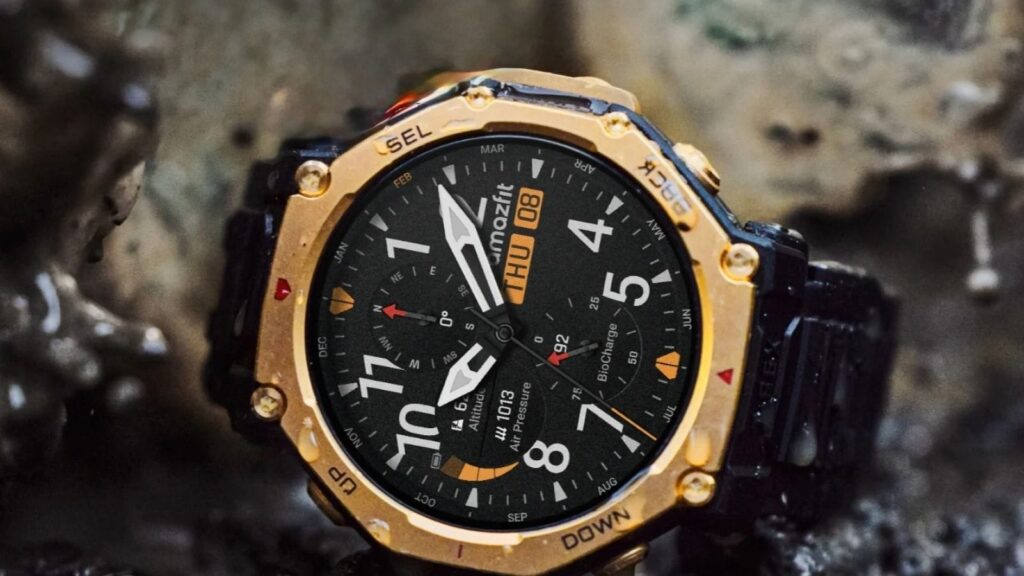
The new update rolling out to the T-Rex 3—firmware 4.10.5.1—introduces the HybridCharge feature. Notebookcheck covered it in detail, noting it as an enhanced version of Amazfit’s existing BioCharge system. The key difference: it now lives on the watch itself instead of being buried in the Zepp app.
The algorithm isn’t disclosed — same situation as Garmin — but it factors in sleep quality, workout intensity, and lifestyle inputs you can log directly on the watch. Values rise after good rest, drop after hard sessions. There’s also a new mid-workout alert that tells you if your intensity is about to tank your reserves. Honestly, it’s what the T-Rex 3 has been missing.
The Case for a $226 Garmin Fenix Alternative
The Amazfit T-Rex 3 has been making this argument for a while. It’s a rugged smartwatch, the GPS is solid, and it sits at a price point that makes the Fenix look like a luxury item. The Fenix 8 Solar starts above $900. The T-Rex 3 is under $250.
What it’s been missing is the kind of ecosystem depth that keeps Garmin users loyal. HybridCharge doesn’t replace all of that, but it addresses the one feature most casual athletes actually use every day. If you’re a recreational runner or someone who trains a few times a week, Body Battery — or something like it — is probably your most-used Garmin feature. And now the T-Rex 3 has a version of it.
My Take
I’m not saying the T-Rex 3 beats the Fenix. It doesn’t — not across the whole feature set. But the gap is shrinking in the places that matter most to everyday athletes.
If you’re already deep in the Garmin ecosystem, this probably doesn’t move you. But if you’re shopping the Fenix for the first time and wondering whether the price is worth it, the T-Rex 3 just got harder to dismiss. A Garmin Fenix alternative that reads your energy levels, warns you mid-workout, and costs less than a third of the price? That’s a real argument now.
Lauren has been writing and editing since 2008. She loves working with text and helping writers find their voice. When she’s not typing away at her computer, she cooks and travels with her husband and two kids.


