
Google launched its new Pixel 11 series earlier this week – there is a new vanilla, two new Pro and one new foldable model. All that’s missing now is an affordable a-phone.
The massive increase in RAM prices has affected the Pixel series. Google now offers 256GB storage as standard on all 11-series models, which is a good thing, but the Pixel 11 Pro and 11 Pro XL start with 12GB of RAM. If you want 16GB (which is what all Pixel 10 Pro and 10 Pro XL phones had), you will have to get a 512GB or a 1TB model. The vanilla phone only comes with 12GB of RAM, while the foldable always gets 16GB.
The Pixel 11 series is currently on pre-order and will be available from August 20. During that time, Amazon is offering a trade-in bonus (extra money on top of the old device’s value).
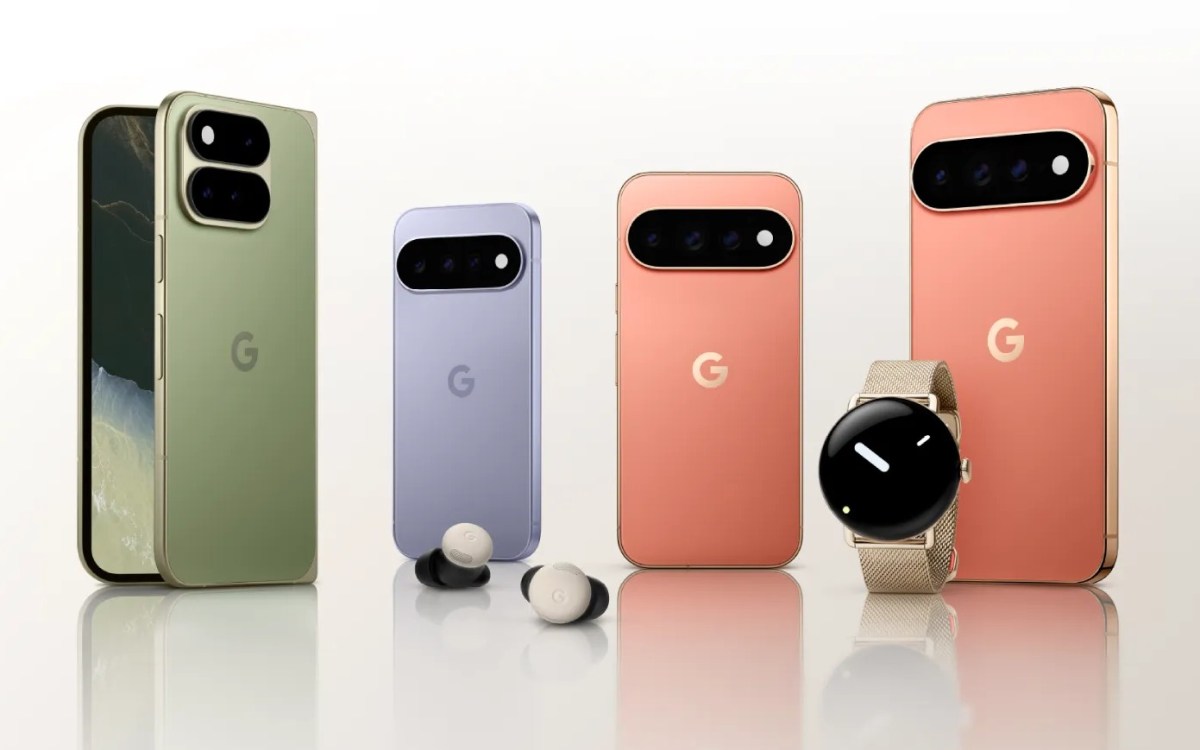
The vanilla Google Pixel 11 is powered by the same Tensor G6 chipset as its more expensive siblings. However, it misses out on the HiLight RGB LED. Oh well. At least it has a larger main camera sensor than the Pixel 10 (48MP 1/1.56” vs. 1/2.0”), while keeping the 5x/112mm 10.8MP telephoto and 13MP ultra-wide cameras the same.
The new model also features faster 25W Pixelsnap magnetic wireless charging (up from 15W), but wired charging is the same at a slow-ish 30W rate. The battery capacity is the same too – Google is betting that the more efficient G6 chip will improve battery life.

The Google Pixel 11 Pro does have HiLight – it’s an RGB LED next to the cameras on the back, which serves as a notification light and is also used by the Gemini AI. The Pro model has a 6.3” OLED display, which is the same size as the vanilla phone, but it is a sharper (1280p+ vs. 1080p+) LTPO panel. The battery capacity is basically the same as last year as is the 30W wired charging. Wireless charging has been upgraded to 25W like on the vanilla model.
The Pro has more capable cameras, though they are mostly the same as last year. This includes a 50MP main with a large 1/1.3” sensor and a 48MP ultra-wide with an autofocus lens. The telephoto camera is different – it has a 48MP 1/1.95” sensor and a 5x/106mm lens compared to a 48MP 1/2.55” sensor and a 113mm lens on the 10 Pro. It remains to be seen how much of a difference this makes.

The Google Pixel 11 Pro XL is just a larger Pro – it has a 6.8” display (1334p+, LTPO) and a 5,115mAh battery. That’s not so big – in fact, it’s 85mAh smaller than the 10 Pro XL battery. The new XL model has 45W wired and 25W wireless charging, the same as the old XL. Wired charging seems to be marginally faster, though, going up to 75% in half an hour, compared to 70%. We will be testing that in our review.
For the Pixel 11 Pro XL (but not the small Pro) and the Pixel 11 Pro Fold Amazon is offering an additional €100 bonus when trading in an old phone – the condition is that it has to be an old Pixel. But even if you send in another brand, you still get a great €400 bonus. You can find more details on this offer here.

The new Google Pixel 11 Pro Fold is slimmer and lighter than its predecessor – it measures 10.1mm folded (5.0mm unfolded) and weighs 239g. That’s still thicker and heavier than competing book-style foldables, but it’s a decent improvement over the rather chunky 10 Pro Fold, which was 10.8mm folded (5.2mm unfolded) and weighed 258g.
This slimming down had a negative impact on the battery, which now only has 4,806mAh capacity. This puts it below the Z Fold8 Ultra (5,000mAh) and the Pixel 10 Pro Fold (5,015mAh). At least wireless charging was boosted to 25W, but wired is still only 30W.
Google also equipped the new foldable with the vanilla phone’s 48MP 1/1.56” main camera, which replaces the 48MP 1/2.0” module from last year. That sensor might have been okay for the Pixel 10, but it was certainly not suitable for the pricey Pixel 10 Pro Fold.
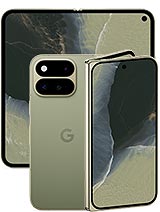
The new Google Pixel Watch 5 is not so new – it uses the same chassis, display and chipset (Snapdragon Wear W5 Gen 2) as its predecessor. It now has double the on-board storage, 64GB, while keeping RAM at 2GB. The battery is mostly the same too. The major upgrades this generation are Gemini Intelligence and improved health tracking.

The Google Pixel Buds Pro 2 got a new color option, Olive, and new software features that include Dynamic ANC and an improved Live Translate mode. This is coming to all Pro 2 buds as an update, so if you already have a pair, you aren’t missing out on much.

There will be a Pixel 11a, but not for a few months. For now, the cheap model remains the Pixel 10a, which has a solid €200 discount (for the 256GB variant). This has a two-generation-old Tensor G4 chip with only 8GB of RAM. The cameras feature the small 48MP 1/2.0” sensor and lack a dedicated telephoto lens.

Google’s new foldable goes up against three foldable Galaxys. Samsung introduced the wide Galaxy Z Fold8 this generation – a form factor that Google was close to with the original Pixel Fold but that it has since abandoned.
Note that the Galaxy Z Fold8 and Z Fold8 Ultra now sport small discounts – keep in mind that they only became available less than a month ago.

The Samsung Galaxy Z Fold8 Ultra is the successor to the large Z Fold7. It measures 8.9mm folded (4.1mm unfolded) and weighs 215g, making the Pixel 11 Pro Fold feel chunky. And this is with a larger 5,000mAh battery that supports 45W wired and 20W wireless (non-magnetic) charging. While the wide Z Fold8 has a mid-range 50MP wide plus 50MP ultra-wide camera setup, the Ultra boasts a 200MP main (1/1.3”), 3x/67mm 10MP telephoto and a 50MP ultra-wide.
Google doesn’t have a flip, so the Samsung Galaxy Z Flip8 is left to compete with the Motorola Razrs. Note that the trade-in bonuses for the Z Fold8 Ultra and the Z Flip8 are smaller than they were last week.

Finally, Samsung’s Galaxy S26 series has been out for months now and their prices have fallen considerably since launch. The Galaxy S26 Ultra is competing against the Pixel 11 Pro XL and it has a massive €500 discount, bringing the price of the base model under €1,000. Even if you pick the 1TB S26 Ultra (the only model in the family with 16GB of RAM), you are still only looking at a €1,450 bill. That’s just €50 over the base 12/256GB Pixel 11 Pro XL.
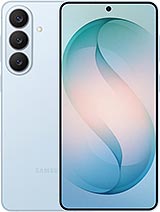
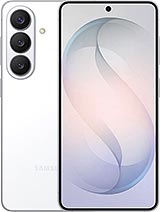
Similarly, the 6.3” Galaxy S26 is under €800 for the base 12/256GB model, while the Pixel 11 Pro is €1,200. Even the vanilla Pixel 11 is €1,000. And maybe it says something about their relative popularity, but the Galaxy S26+ is cheaper than the vanilla S26, making it the cheapest S26 model.
We may get a commission from qualifying sales.


