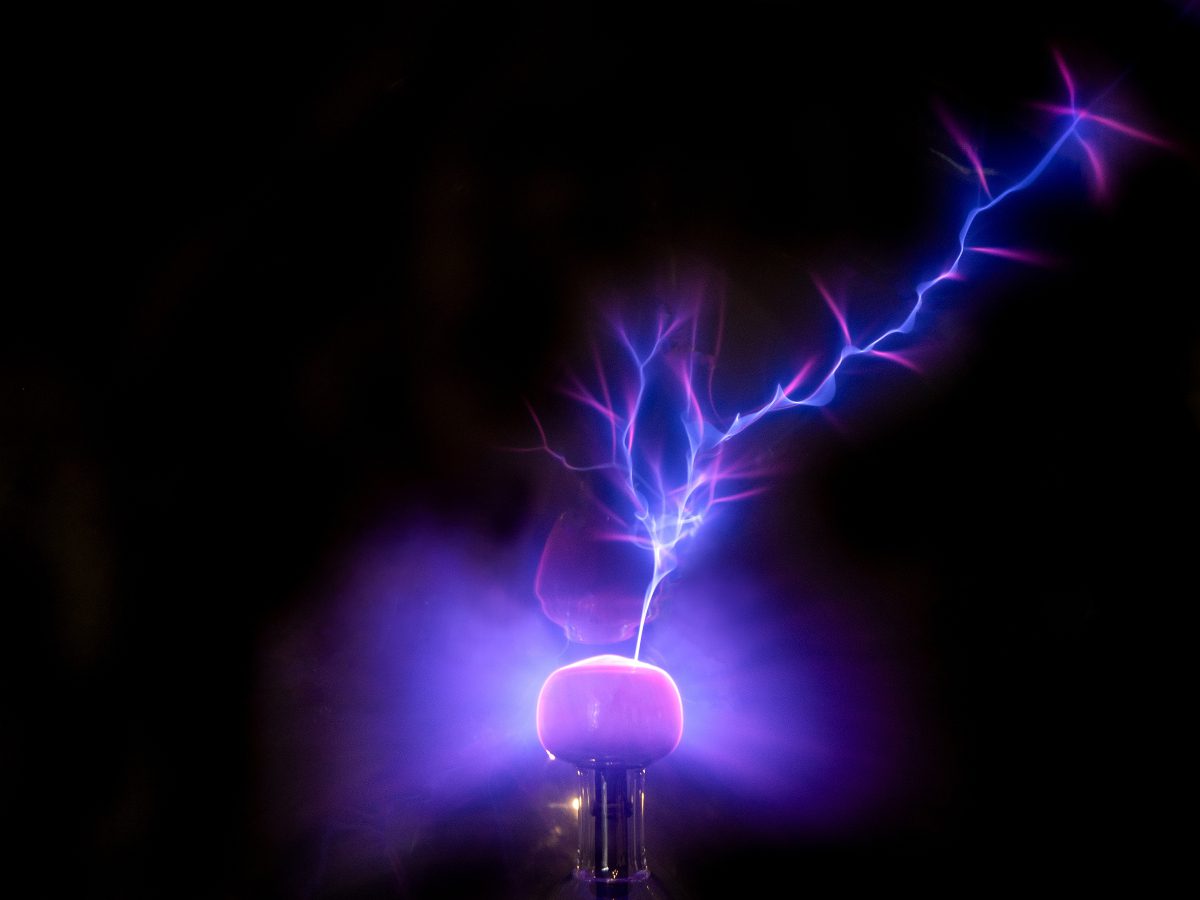
Researchers in Germany have developed what appears to be a new approach to destroying persistent PFAS ‘forever chemicals’ in contaminated water, using two complementary treatment techniques based on cold atmospheric plasma and hydrodynamic cavitation.
The work, led by scientists at the Helmholtz-Zentrum Dresden-Rossendorf (HZDR), remains at laboratory scale but points towards a potential future treatment technology aimed at destroying PFAS rather than simply concentrating them for disposal. The findings have been published in the peer-reviewed journals Scientific Reports and Chemical Engineering Journal Advances.
Per- and polyfluoroalkyl substances (PFAS) comprise a family of more than 10,000 highly persistent industrial chemicals whose carbon-fluorine bonds make them resistant to degradation. Their widespread use has led to contamination of rivers, groundwater and drinking water sources worldwide, prompting increasing regulatory scrutiny and a search for technologies capable of permanently destroying them.
The HZDR team investigated two separate treatment methods.
The first uses hydrodynamic cavitation, in which PFAS-contaminated water is forced through a narrow constriction, creating microscopic vapour bubbles.
“In hydrodynamic cavitation, we pass PFAS-enriched water through a constriction, generating small vapor bubbles,” explained Dr Sebastian Reinecke, head of the Department of Water and Environmental Technologies at HZDR.
Because long-chain PFAS compounds are surface-active, they accumulate on the surface of the bubbles. As the bubbles subsequently collapse under pressure, local temperatures rise dramatically.
“When the bubbles burst under the rising ambient pressure in the water downstream of the constriction, the PFAS that are attached to the bubbles are exposed to local temperature spikes of several thousand degrees Celsius,” Reinecke said.
The researchers believe highly reactive hydroxyl radicals generated during cavitation also contribute to degradation.
“Our hypothesis is that they attack the intermediate products, significantly boosting PFAS degradation.”
Using perfluorooctane sulphonate (PFOS), one of the most studied PFAS compounds, the researchers reported degradation of around 37% of dissolved PFOS while observing increasing release of fluoride, indicating that some of the carbon-fluorine bonds had been broken.
“We are now conducting follow-up experiments to increase the degradation rate,” Reinecke said. “Our goal is to improve the process to a degradation rate of more than 80 percent of the PFAS in the solution and mineralizing more than 50 percent of the fluorine that is bound in the chemicals – that means, breaking down the carbon-fluorine bonds that are typical of PFAS.”
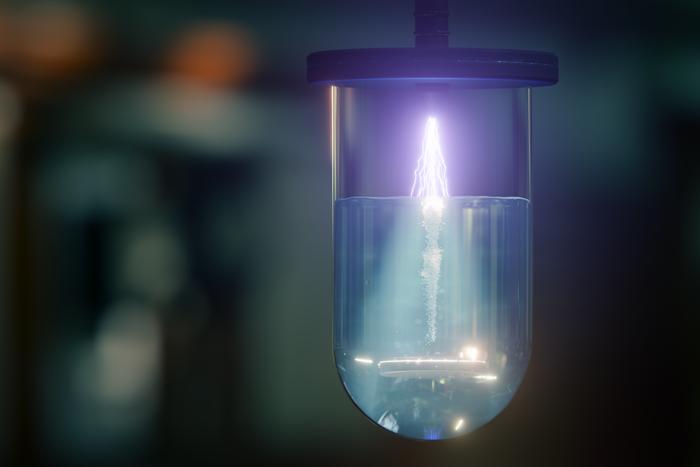
In a second series of experiments, the team used cold atmospheric plasma in combination with gas dispersion. Gas bubbles carried PFAS molecules to the water surface, where highly reactive plasma species attacked the contaminants.
“The PFAS attach to the surface of the gas bubbles. As they rise, the water is constantly circulated. This brings the PFAS to the surface, where they are broken down in the plasma,” Reinecke explained.
This approach almost completely degraded both long- and short-chain PFAS compounds, according to the researchers, while releasing around 35% of the fluorine present as fluoride salts. However, they also reported that the process consumed considerably more energy than cavitation and generated numerous transformation products that require further investigation.
“While this method has significantly faster reaction kinetics than cavitation, it also consumes far more energy per volume unit,” Reinecke noted. “In addition, the process generates numerous transformation products that we have not yet been able to investigate in detail – for instance, gaseous compounds that form during the reaction.”
The researchers are now working to increase treatment volumes from laboratory-scale experiments of around 50 millilitres to systems capable of processing several litres of contaminated water. Their longer-term ambition is to combine both technologies into a single treatment process.
“I believe we’ll achieve high degradation rates by combining the highly reactive species from the plasma with the effects of cavitation,” said Reinecke.
If successful, the researchers say the combined approach could offer a future route to destroying PFAS directly in contaminated water, although substantial work remains to improve degradation efficiency, reduce energy consumption and fully understand any by-products generated during treatment.




