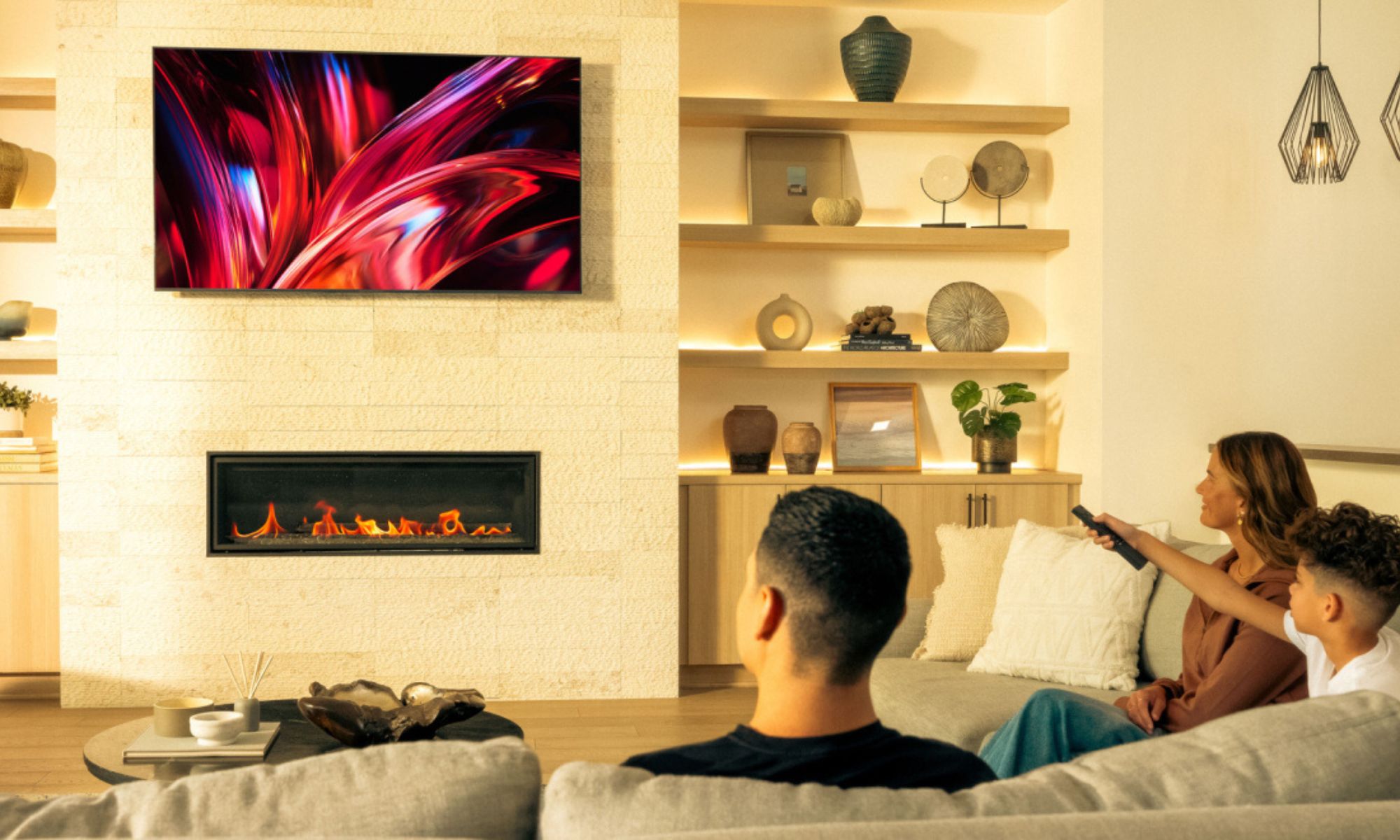
Counterpoint Research counted a 20% jump in OLED shipments for the second quarter of 2026, over three months when the TV market as a whole shrank. Sony picked that same quarter to put an LCD at the top of its range, above the OLED it had spent a year selling as the best picture money could buy in a living room.
The BRAVIA 9 II is the LCD. True RGB means its Mini LED backlight drives red, green and blue diodes on their own, and the brightness that buys is the pitch. Below it in the lineup is the BRAVIA 8 II, a QD-OLED, $300 cheaper at 65 inches. Both come only in 65 inches.
My call
Curtains closed most evenings, and the 8 II is the buy. Sun on the screen through the afternoon, or a wall that wants more than 65 inches, and the 9 II takes it.
More readers belong in the first group than Sony’s marketing would have you believe, and the newer backlight doesn’t change that. The rest of the piece is why, plus the two points where I’d hand the money to the 9 II without arguing.
Watching in daylight
Sony built the 9 II for four in the afternoon. The matte treatment on its glass, worked out with the company’s own film studio, absorbs the light landing on it, and owners with skylights above them and mirrors across the room say they see nothing come back off the screen.
The 8 II runs about a quarter brighter than the OLED before it, helped by a heatsink Sony added behind the panel, and with half-drawn curtains that’s plenty. Push a white frame across the whole screen, though, and it dims itself to spare the panel: snow, white walls, hospital corridors. The 9 II holds its output through every one of them.
Daylight goes to the 9 II. South-facing windows end the argument before any other category gets weighed.
Blacks after dark
Yellow subtitles. Owners of the 9 II keep reporting a green halo around them, thrown by an RGB backlight asked to light a small bright object on a black field, and setting the captions to white makes it disappear. Plenty of people will never notice. Plenty of others will never unsee it.
The 8 II never has to try. Black on a QD-OLED panel means the pixel is switched off, so letterbox bars vanish into the bezel and a night interior holds its shadows. You get that on day one, out of the box, without opening a menu.
Credit where it’s due, the 9 II gets nearer to OLED black than any backlit television I’m aware of, with owners going hunting for blooming and turning it up mainly in menus. Night viewing still belongs to the 8 II.
The side seats
Seven seats in his living room, three of them showing a picture he was happy with. That’s one owner’s count on the 65-inch 9 II, and his nine-year-old picked out the bad chair unprompted.
Move to the far end of a sofa and the 9 II starts handing back contrast, roughly 40 degrees out. Blooming shows up around the same point. X-Wide Angle Pro softens that. It doesn’t cure it. Take the same chair with an 8 II in the room, and the picture looks the way it did from the middle.
Seating goes to the 8 II by the widest margin of any category here. Sectionals and kitchen islands are 9 II problems, and counting your chairs before you spend the money is worth more than reading another brightness figure.
Game mode
Reality Creation comes greyed out in game mode on the 9 II. Console players with older BRAVIA sets keep that sharpening pass switched on deliberately, and owners of the new one noticed its absence within days of unboxing.
Racing games are where owners run into it most. Fast pans smear. Color trails behind anything bright. Liquid crystal was always slower than a self-emissive pixel, and the RGB backlight chasing the image adds its own lag. Sony has reportedly acknowledged the smearing.
Gaming goes to the 8 II. You’ll notice it in retro emulation and 60 FPS console titles. At a locked 120 FPS, I doubt most people ever would.
24p judder
Film night turns the argument around. OLED pixels switch instantl,y and 24-frame judder shows up on slow pans, so owners chase it through the motion menus, land on interpolation, then discover the soap-opera effect they were trying to avoid in the first place.
Liquid crystal blur covers that judder on the 9 II. No interpolation, no menu, nothing to switch on. OLED owners who moved across mention it before they get to brightness.
Movies go to the 9 II. Nothing in the 8 II answers this one. Split your evenings between films and games, though, and the OLED still comes out on top, since smearing is the louder fault of the two.
Sizes and price
55 and 65 inches. That’s the whole BRAVIA 8 II range, it isn’t growing, and a wall measured for 75 has made your decision already. Sony’s 9 II runs 65, then 75, 85, and a 115-inch model for people with a room set aside for it.
$3,599.99 for the 65-inch 9 II on Sony’s US store in August 2026. $3,299.99 for the 8 II sitting next to it. Shops have had the 8 II on the floor a lot longer, and they knock more off it.
65 inches goes to the 8 II on price. Past 65 inches there’s no contest left to hold.
Where the BRAVIA 9 II wins
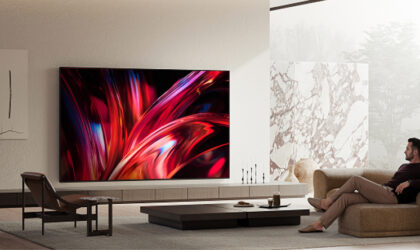
Sony BRAVIA 9 II 65” Class True RGB 4K HDR Google TV with Gemini (2026)
South-facing glass, lights on until bedtime, nobody willing to close a curtain at 3 PM. Sony aimed the 9 II squarely at that room, and its matte coating kills reflections at the surface, a different trick from firing more light through them.
Scale is the other case. Nobody measuring for 75 or 85 inches has an OLED to choose in Sony’s range, and the Mirage Stand runs cables behind a transparent panel so a screen that big looks like it’s floating over the cabinet. Its remote lights up, too, which stops being a small detail somewhere around 11 PM.
Anybody who gave up on 24p stutter years ago should be here. So should the household leaving rolling news on all day with burn-in on their mind.
Where the BRAVIA 8 II wins
Sony BRAVIA 8 II 65” Class QD-OLED 4K HDR Google TV with Gemini (2025)
Lights off, and the 8 II is untouchable. No halo on the subtitles. Prestige drama shot four stops under holds together the way it left the grade.
Nobody gets stuck with the bad chair. Whoever ends up at the far end of the sofa is looking at what the middle seat gets, and in a house where four people watch at once that beats any number printed on the box.
Gamers should be here for the faster pixel response and for Reality Creation surviving in game mode. Sound is the quieter reason. Actuators vibrate the screen itself on the 8 II, so a line of dialogue comes out of the actor’s mouth and not from a driver bolted underneath, and voices carry more weight than the beam tweeters on the 9 II give them.
My final verdict
Buy the 8 II. Dark scenes are what you’ll be looking at most nights, and no backlight does black the way a switched-off pixel does. Every strength I’ve credited to the 9 II came with a footnote attached.
Two rooms change my mind. One drenched in daylight, one with a wall that needs 75 inches. Both send you to the 9 II with nothing to regret afterwards. What I’d avoid is paying the True RGB premium and then drawing the curtains every evening, which buys the one advantage you just switched off.


