ObscuraFlex, the system designed to function as both a digital viewfinder and a full-frame digital back for large format cameras such as 4×5 systems and adapted vintage platforms, is expanding beyond its original smartphone-first workflow.
The system has traditionally relied on smartphones as its capture device, including modern iPhones used for both stills and video. That approach has often prompted questions from users asking why a dedicated camera is not used instead of a phone.
The reasoning has previously come down to practical limitations, including physical bulk in adapted setups, focusing constraints with certain cameras, and the advantages smartphones offer, such as large touch displays, image orientation tools, and high-resolution RAW capture.
Now, ObscuraFlex is addressing that question directly with a new expansion into dedicated compact digital cameras.
The rollout begins with support for the Ricoh GR III and GR IV, with potential compatibility for the GR II. The GR IIIx is excluded due to optical alignment constraints. Depending on user response, future support may extend to cameras such as the Leica D-Lux 7 and D-Lux 8, as well as selected Panasonic Lumix models like the new L10.
Camera Integration Through Custom Mounting System
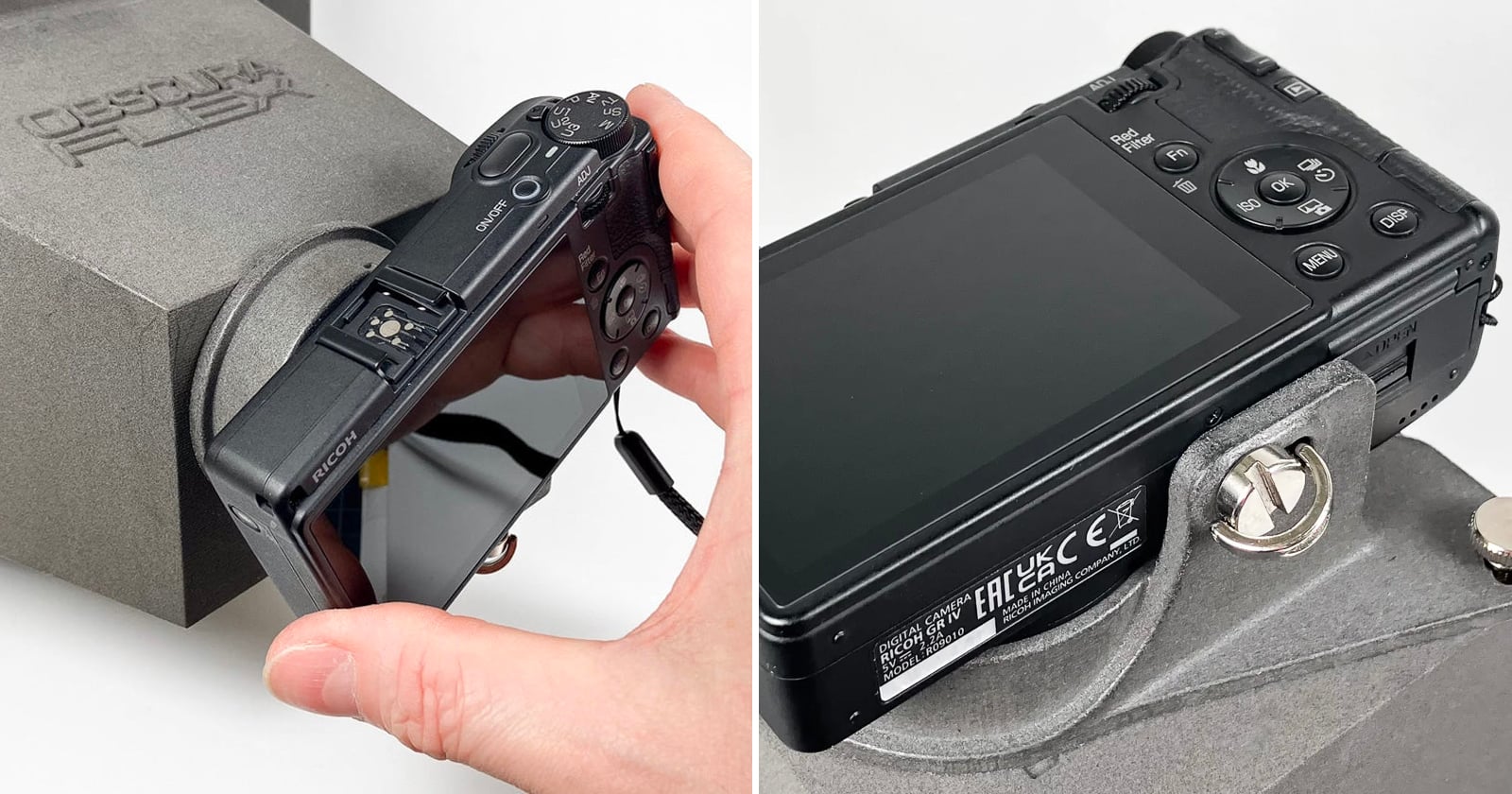
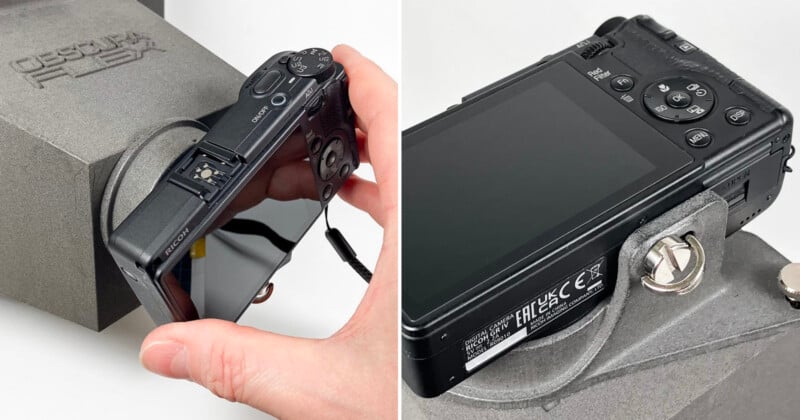
To enable this shift, ObscuraFlex has developed a new camera-specific mounting cradle system built through multiple prototype iterations. The design uses the Ricoh GR IV Monochrome as a reference platform and integrates directly with the camera’s accessory bayonet mount.
For added stability, the system also secures to the camera’s 1/4-inch tripod mount, distributing weight and improving alignment across the setup. A rotational adjustment mechanism has been added to the twist-lock system, allowing fine-tuning for horizon alignment during use.
Users can select a dedicated cradle based on their camera model when configuring a new ObscuraFlex kit, or purchase compatible cradles separately for existing systems.
Why the Ricoh GR Series Fits the System
The Ricoh GR series offers a combination of characteristics that make it particularly well-suited for this hybrid large-format workflow. These include a minimum focus distance of approximately 30 millimeters in macro mode, high ISO performance reaching up to 409,600, and a compact body weighing approximately 255 grams, making it only marginally heavier than an iPhone 17 Pro Max at 233 grams.
The camera also includes manual focus with magnification assist, RAW capture, expandable storage via memory cards, and a built-in flash hot shoe, offering a level of control and flexibility not typically available in smartphones.
Within early testing, the Ricoh GR IV Monochrome has stood out in particular. Its high ISO grain structure and tonal response complement the texture of ObscuraFlex’s ground glass system, creating a cohesive blend between digital capture and analog-inspired rendering. It has quickly become a preferred pairing for handheld 4×5 digital workflows.
From Smartphones to Dedicated Cameras in Hybrid Imaging
The shift toward dedicated compact cameras reflects a broader trend in experimental imaging workflows, in which hybrid systems combine legacy cameras with modern digital capture methods.
As previously covered by PetaPixel, a parallel can be seen in recent Olympic imaging projects by Getty Images photographers Pauline Ballet, Ryan Pierse, and Hector Vivas during the Milan Cortina Winter Games. The team used a mix of infrared cameras, thermal systems, vintage Graflex cameras, and fixed multi-exposure setups to create alternative visual narratives alongside traditional sports coverage.
One of the most notable approaches was the “Back to the Future” project, which used vintage Graflex cameras paired with modern digital workflows to echo the visual language of the 1956 Winter Games in Cortina. In another series, “Infrared,” modified mirrorless cameras captured wavelengths beyond visible light, while “Winter Heat” used thermal imaging to visualize athletes and crowds in extreme environmental contrast.
Early Testing and Image Results
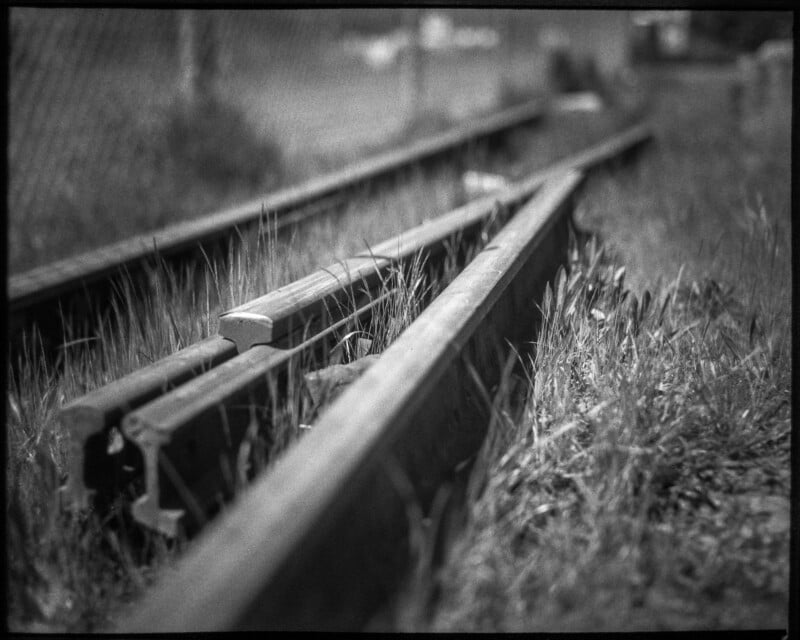
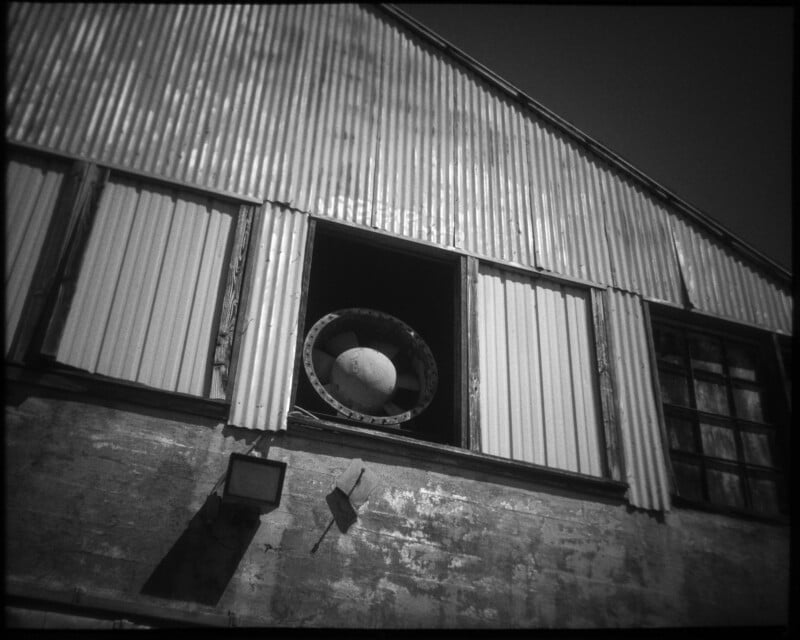
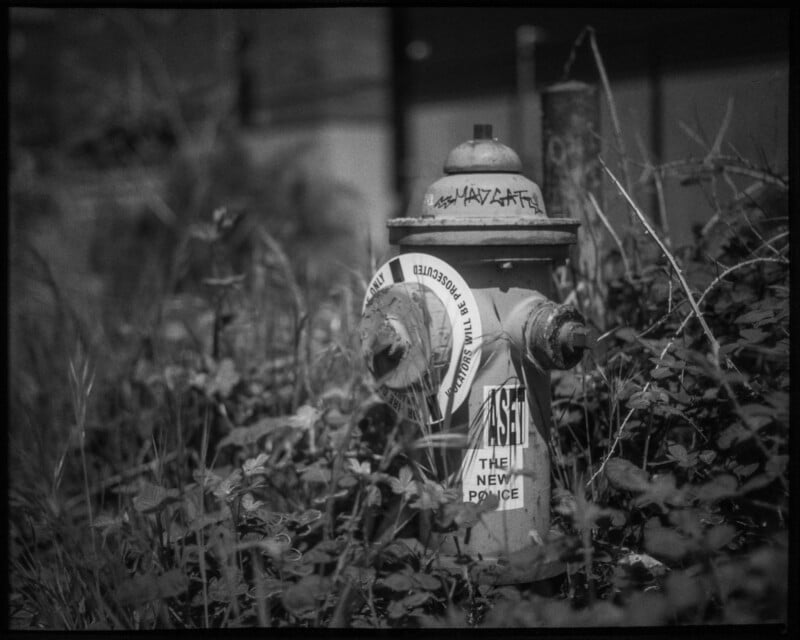
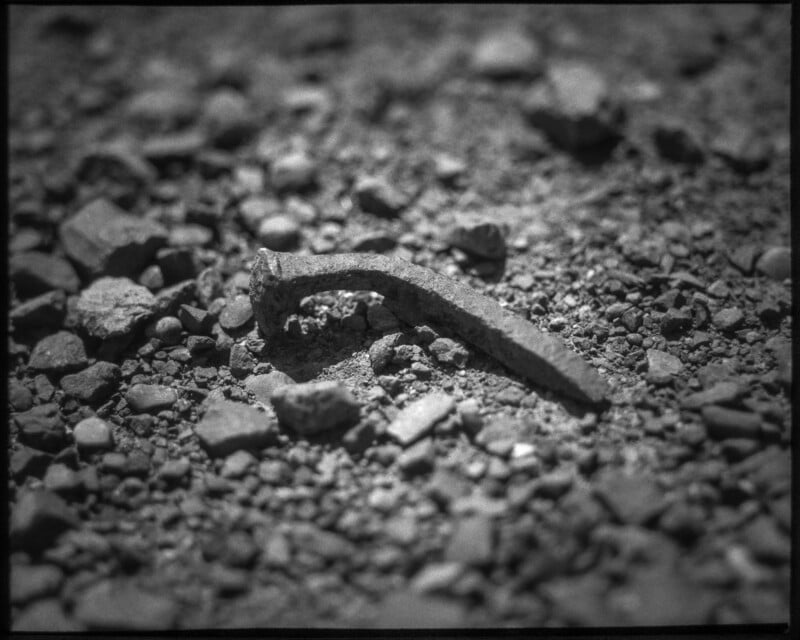
Initial ObscuraFlex test images were captured using a Graflex 4×5 paired with the ObscuraFlex adapter and the Ricoh GR IV Monochrome as the digital capture system. Shooting was conducted handheld at ISO 3200, with shutter speeds between approximately 1/60 and 1/100 second.
When working with cropped Ricoh RAW files at 6192 x 4128 resolution, the resulting 4×5 frame output equates to roughly 5K by 4K resolution. This places the output in a range similar to that of a 4×5 negative scanned at approximately 1,000 DPI, depending on cropping and scanning methods.
According to ObscuraFlex, while smartphone capture still offers higher raw resolution in ideal conditions, early tests suggest the Ricoh system produces a more consistent tonal response and more natural rendering within this hybrid workflow.
Development is already underway to expand compatibility to additional compact systems, including the Leica D-Lux series and selected Panasonic Lumix models. Future updates will focus on refining mounting systems and evaluating optical compatibility across a broader range of compact cameras suitable for large format integration.
Sample Gallery
Pricing and Availability
ObscuraFlex users can configure their setup by selecting a camera-specific cradle when building a new kit. Existing users can also purchase compatible cradles separately through the ObscuraFlex shop, depending on camera model availability.
Image credits: ObscuraFlex


